
Garima GurungJune 21, 2026
You Don't Have a Copyright Problem (Until You Have a $140 Million One)
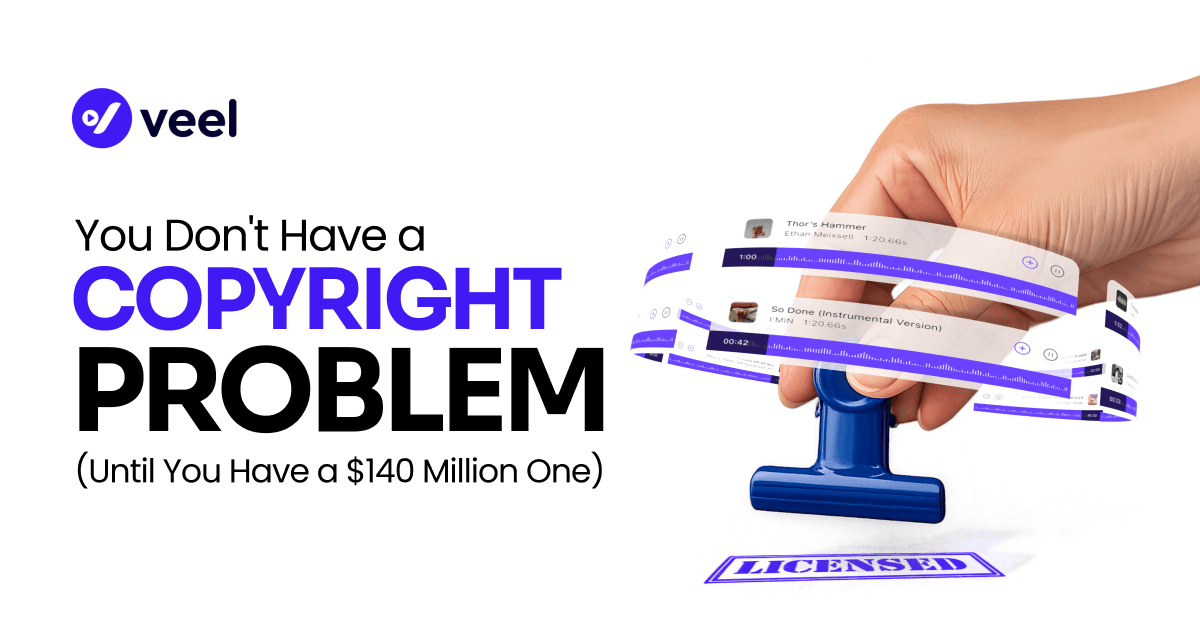
It's strange how, when running campaigns, we assume that creativity is the hard part, when in reality, creativity is usually the easiest thing in the room. Everything after it is where things quietly fall apart.
From what we've seen, creating content isn't the most difficult thing brands are struggling with today. The real challenge is keeping that content alive once it's been created. And the question remains: "We've created content to the best of our ability, but what do we do after this?"
User-generated content (UGC) has made content production feel infinite, which sounds like a great deal in theory. But in reality, that infinite content also means infinite opportunities for something to go wrong. Often, it comes down to a trending sound that someone on the team assumes, "It's probably fine!"
And it's probably not.
Where Copyright Problems Actually Begin
Have you ever posted content with a trending sound, only to come back a few days later and find that it's just you... with no sound?
Most copyright issues begin during editing timelines, where everyone is racing against deadlines. The campaign has already been approved in someone's head, and nobody wants to be the person who slows things down by asking whether the music is licensed.
What happens next is fairly predictable. The content gets edited, looks great, and gets approved. But when it's finally time to post, the video is flagged, muted, or taken down. Suddenly, the same video that felt like a win is met with confusion and frustration.
When Authenticity Runs Into Copyright
People have now become highly skeptical of overproduced advertisements. They want genuine voices and real people using real products.
And this is where the real bottleneck sits, not in idea generation or publishing, but in editing. It's the part of the workflow where content quietly transforms from raw creativity into something safe enough to survive on the internet.
In 2022, Sony Music sued Triller for allegedly using licensed music beyond the scope of its agreements and failing to make royalty payments. What began as a platform built around creator-generated content quickly became entangled in copyright disputes because music rights and content usage couldn't keep pace with the scale of production.
The exact moment copyright risks usually enter the picture is when music is added, clips are trimmed, and creative decisions are made faster than ever. The industry has spent years optimizing content creation, distribution, and analytics, but not necessarily in this moment.
Today, we have better creator marketplaces, better analytics, and better distribution tools. Yet the editing process still behaves much like it did when content volumes were only a fraction of what they are now.
The Importance of Licensing the Music You Use in Your Videos
Music does more than fill silence. It sets the mood, strengthens brand presence, fuels creativity, and makes content feel more engaging to audiences.
What many people forget is that music is also an intellectual property.
In 2023 alone, YouTube issued more than 722 million copyright claims through its Content ID system, and that number has continued to grow. That's nearly 100 claims every second of every day. And behind each claim is a piece of content that someone worked hard to create, only for it to be flagged, muted, or removed.
It's also important to remember that just because music is available on a social platform doesn't mean it's available for commercial use. Every track has rights attached to it, and those rights determine where, how, and by whom the music can be used.
Licensing ensures that brands have permission to use music in their content, providing peace of mind and avoiding takedowns, muted videos, or campaign disruptions.
Many times, we wonder what in the world could ever go wrong. It’s just music. The truth is, the consequences of getting it wrong can be significant:
- Monetization restrictions
- Legal disputes and licensing issues
- Delayed campaign launches
- Damage to brand reputation
For brands managing dozens or even hundreds of creator partnerships, manually reviewing every asset for copyright becomes nearly impossible. And in a world where content is constantly being repurposed across social media, websites, paid ads, and email campaigns, licensed music isn't just helpful, but it's essential for maximizing the value of your content.
Meet Veel Music
To help brands maximize their content potential, Veel has created something the industry has quietly needed for a long time: a library of rights-cleared music built directly into the platform.
When we post a piece of content, the right track enhances a video, strengthens its message, and creates an emotional connection with viewers. However, using music online is far more complicated than it seems. Copyright restrictions, licensing requirements, and platform policies can quickly turn a great piece of content into a legal and operational headache for both brands and creators.
That’s exactly where Veel Music comes in.
Through Veel’s partnership with Epidemic Sound, brands can now access a library of fully licensed music, the freedom to create content without worrying about copyright strikes, legal complications, or muted posts. Every track is cleared for use, allowing teams to focus on creativity rather than compliance.
What This Means for Brands
Licensing solves one of the biggest challenges in content creation. But finding the right soundtrack still takes time, and that's where Veel AI Lens adds another layer of value.
With Veel AI Lens, music discovery becomes smarter and more intuitive. Instead of spending hours searching through thousands of tracks, AI analyzes the content itself, including its mood, pacing, visuals, and overall tone, to recommend music that fits naturally with the story being told.
Like how we come across on many social media platforms.
Whether the content you are trying to roll out is energetic, emotional, cinematic, educational, or lifestyle-focused, videos receive recommendations tailored to the video’s unique feel. The result is noticeably a smoother workflow:
- Faster editing workflows.
- Less time spent searching for music.
- More consistent brand storytelling.
- Better audience engagement through music that genuinely fits the content.
- Copyright-safe content from creation to publication.
This means that brands no longer have to treat audio as an afterthought or cross their fingers every time a creator adds a trending sound to a video. The music is already licensed, and the content you create, distribute, and run as paid media is safe to use commercially from the start.
Veel Music combines music and AI-powered recommendations from a list of music into a single workflow, helping brands create content that sounds as good as it looks, without the guesswork, risks, or endless searching
The Takeaway
The music in your videos is never just background noise, but a creative decision with legal implications attached.
In a world where content moves faster than contracts, the brands that stay ahead aren't necessarily the ones creating the most content. They're the ones creating content without leaving problems that tick like a bomb behind.
Getting your music licensed doesn't slow down your workflow. It's what keeps your workflow from stalling in the first place.
Ready to get started with licensed music with Veel? Start now