.JPG.jpeg&w=3840&q=75)
Binaya DhakalJune 9, 2026
Music Copyright for Creators and Brands:
Every great piece of content has a sound. For creators, it's the track that makes an audience recognize them before they even see their face, or the one that stops someone mid-scroll because something about it just hit right. For businesses, it goes deeper than that. Sound is part of a brand identity, the mood that makes or breaks the campaign’s mission, and the reason a thirty-second ad stays with someone long after they've watched it.
When it comes to content, music isn’t just background noise, it is what's holding the content together. For both creators and businesses, using music in social media content has quietly become one of the riskiest decisions in the entire workflow and most people don't realize that until it's too late.
Music Copyright on Social Media: Two Different Sides, The Same Problem
Music copyright on social media doesn't show up the same way for creators as it does for a marketing team running promotions. The scale is different, the consequences look different, and the way the problem unfolds is different. But it's catching both off guard, and it almost always starts the same way.
For Creators
For creators, the fallout is usually quieter. A video gets muted, a post that took two days to film and edit gets a copyright claim, a channel that was slowly building real momentum gets a strike that affects everything from monetization eligibility to reach and discoverability. Months of audience-building and content consistency suddenly feel fragile because of a track that was sitting right there in the app with no warning.
The frustrating part is that it rarely feels like a mistake when you're making it. You're in an editing app. There's a music library right there. You pick something that fits the vibe, you export, you post. The idea that this routine decision which you've made dozens of times, could cost you your channel feels genuinely absurd until it happens.
Learn more about how this affects creators: [For creators blog]
For Businesses
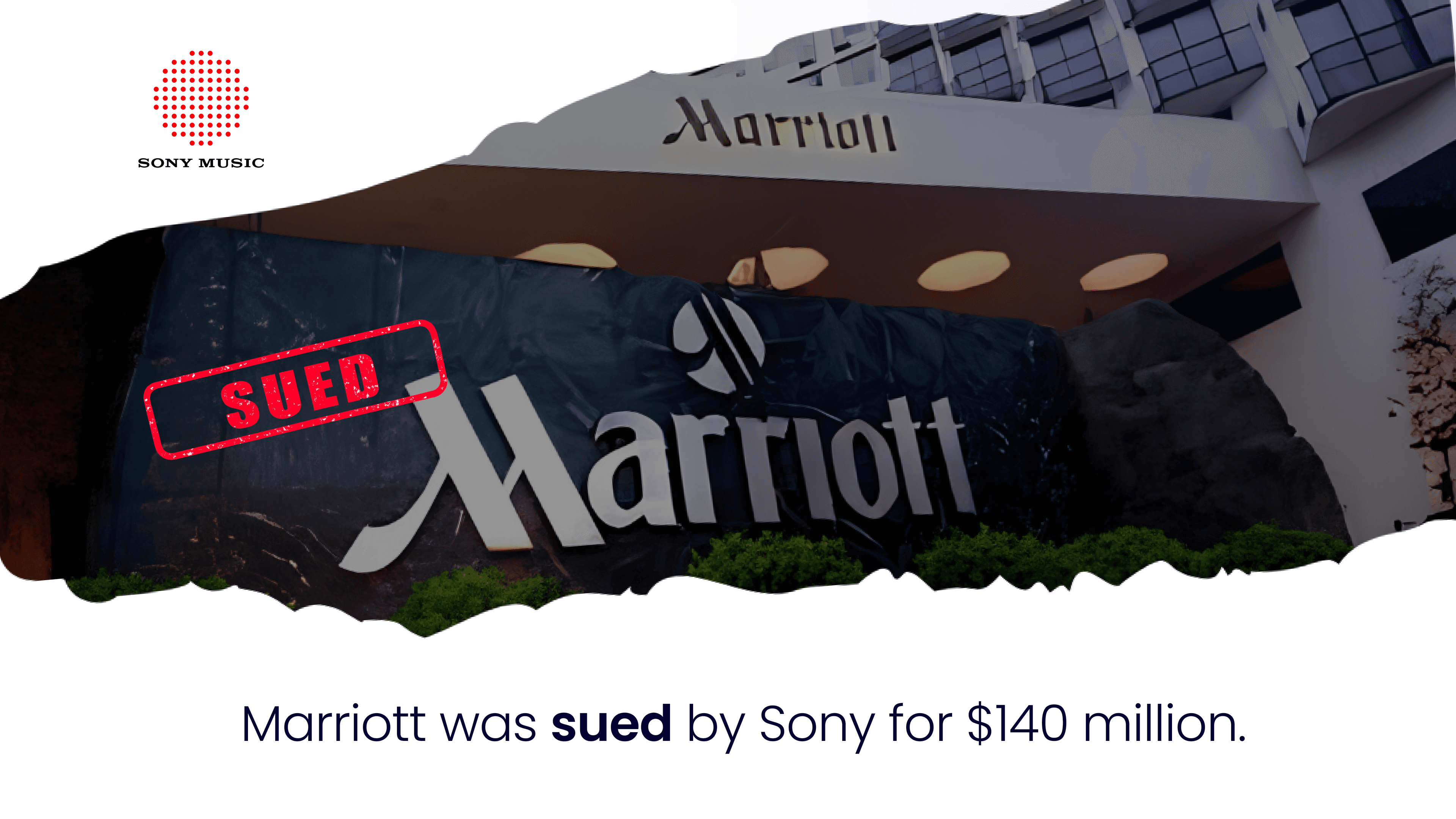
For businesses, the exposure is harder to ignore and the consequences come with more zeros. In 2024, Sony Music sued Marriott International over 931 separate instances of unlicensed music used across social posts that came from owned properties, managed locations, franchisees, and hired influencers. The potential damages under U.S. copyright law reached $140 million.
What made that case particularly unsettling for anyone paying attention was a detail buried in the complaint: Sony said it had been notifying Marriott about the problem since 2020. This wasn't a sudden legal ambush. It was four years of accumulating liability, post by post, while the issue went unaddressed.
And Marriott wasn't the only exception.
- Crumbl was hit by Warner Music over 159 recordings, artists like Taylor Swift and Beyoncé, with potential damages near $24 million
- Bang Energy was sued by Universal Music, Sony Music, and Warner Music, after using popular songs across more than 140 TikTok ads.
- Chili's settled with Universal Music and the Beastie Boys over an ad that recreated "Sabotage".
- Designer Shoe Warehouse (DSW) was sued by Warner Music for over 200+ works.
- The list kept growing through 2024, 2025 into 2026 with cases like Gymshark, OFRA, and more than a dozen NBA teams.
“If music appears in content that promotes a business, the business is on the hook, even when the audio came from a partner, a franchisee, or a hired influencer."
Learn more about how this affects businesses: [For businesses blog]
The Music Licensing Trap Everyone Falls Into
Here's where most people get it wrong and it's an easy mistake to make because the platforms themselves have made it confusing. The music libraries inside TikTok, Instagram, and Reels are licensed for personal, non-commercial use.
They exist so regular users can add a trending sound to a video of their vacation or their dog, not so that brands can soundtrack their paid campaigns with major label recordings. The moment a post promotes a product, runs as a paid ad, or involves any kind of commercial partnership, including paid influencer content, that license no longer applies.
This is also where the confusion around royalty free music and copyright free music comes in. A lot of creators search for "royalty free music" or "copyright free music" assuming that means they're fully covered for any kind of use. In most cases, royalty free just means you don't pay per use, it doesn't automatically mean the track is cleared for commercial content, branded videos, or monetized posts. The licensing terms still vary by track and by platform, and using the wrong one in the wrong context can still result in a claim.
So What's Actually Needed?
A sync license. A sync license is a separate agreement between the content creator or brand and the rights holder; the label, the publisher, or the artist, that specifically clears a track for use in commercial video content. It covers what platforms the content can run on, whether it can be used in paid media, which territories it applies to, and how long it can run. It's not a formality. It's a fundamentally different kind of permission.
“Most companies have never obtained a sync license. Most creators have never heard of a sync license.”
The industry data suggests that the large majority of marketers regularly use music in branded video content. Among that, only a much smaller fraction have any formal music licensing process in place. The gap between those two is exactly where the lawsuit happens.
What This Actually Costs Creators
For creators, the damage from this gap rarely looks like a lawsuit. It's quieter, and in some ways harder to recover from.
- A muted video on the post you spent the most time on.
- A demonetization notice on content that was supposed to be your consistent revenue.
- A takedown on the exact video that a brand was evaluating before deciding whether to work with you.
The financial hit is real but so is the reputational one. The consistency you've built over months takes a knock, your ability to keep content live gets shakier and the trust you've built with an audience gets tested in ways that are genuinely hard to explain.
Sound Is Identity and That's What's Really at Stake
Beyond the legal and financial consequences, there's something less tangible getting disrupted and it might matter more in the long run.
Audiences recognize creators through sound. The music someone chooses signals their taste, their mood, the world they're inviting you into. It's part of what makes a creator's content feel like theirs and not anyone else's. Change the sound, and you change the feeling. Lose it entirely through a mute or a takedown, and something in the audience relationship quietly shifts.
Brands build the same kind of recall through sonic consistency. Think about the brands you remember most from advertising. Chances are, you remember how they sounded too. The genre, the feeling, the specific kind of energy underneath their campaigns, that's not by an accident. It's years of intentional audio identity building up in memory. When music copyright issues strip your brand identity, it interrupts the thread you’ve created with your audience. And rebuilding that consistency takes longer than people expect.
How to Use Music in Content Legally and What Veel Built to Make It Simple?
Veel's answer to this isn't a workaround, a disclaimer, or a terms-of-service clause that puts the responsibility back on you. It's a library of commercially licensed, rights-cleared music built directly into the editing experience, inside the tool where content actually gets made, available before you ever have to think about licensing.
This is different from the royalty free music libraries you'd find scattered across the internet, where the terms vary by track, the quality is inconsistent, and you still have to read through licensing agreements before using anything commercially. And it's different from the copyright free music available on platforms, which doesn't mean what most people think it means in a commercial context. With Veel, the clearance is built in before you ever open a project.
Here's What Veel’s Editor Looks Like in Practice
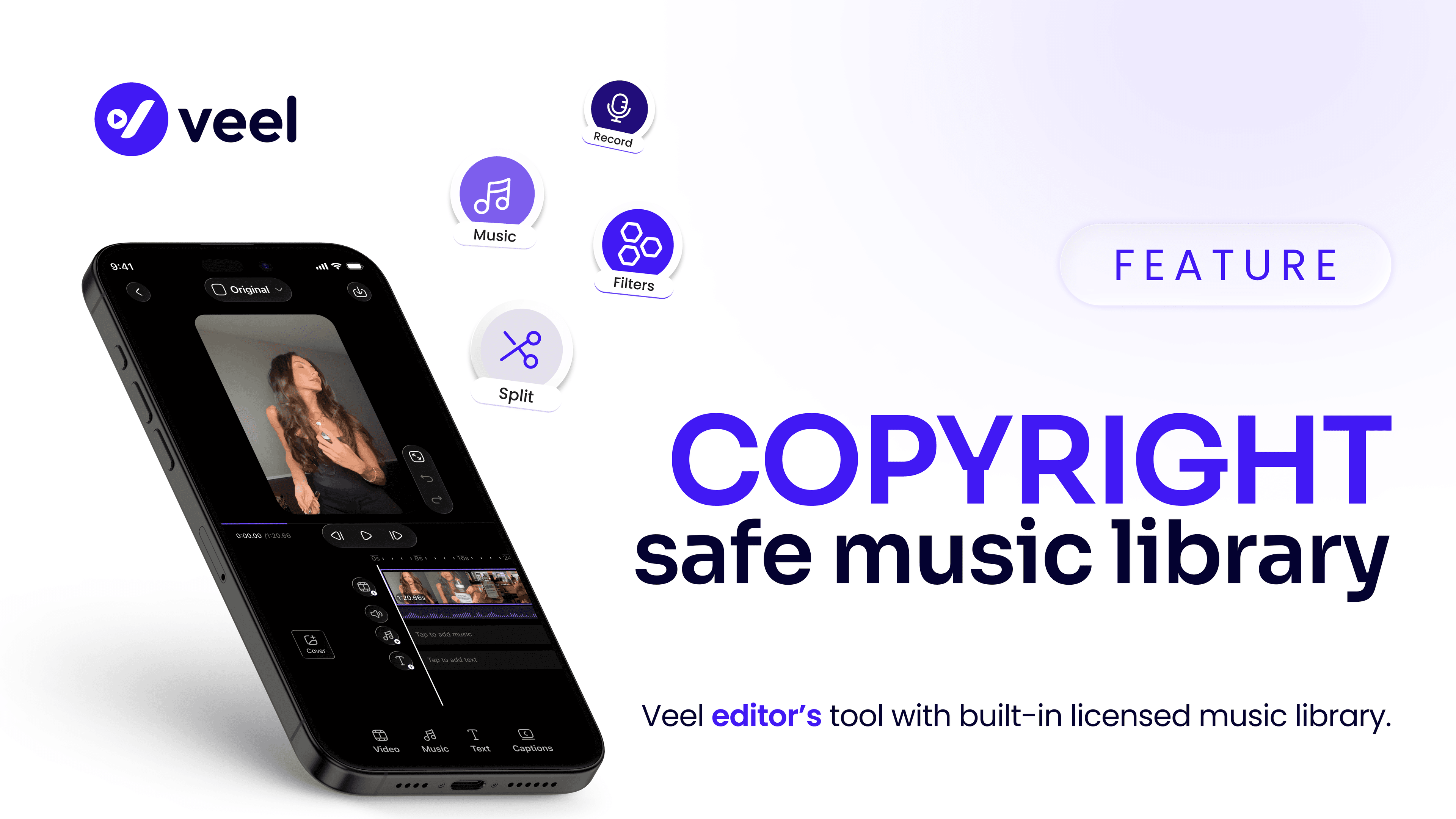
Every track is cleared for commercial use. Branded content, paid campaigns, monetized posts, it's all covered for both creators and businesses. No asterisks or no "personal use only" fine print that you could miss out on.
The library is organized by genre, mood, and energy. Whether you need background music for videos that feels cinematic and slow, or something high-energy and punchy for a product reel, or warm and conversational for a talking-head piece, you're not sorting through hundreds of irrelevant tracks. You find what fits, you use it in and you publish.
No sync license to chase down. No licensing portal to navigate. No tab-switching before a campaign deadline. The music is there, it's cleared for social media marketing, and you move on with creating.
Why Veel's Editor Tool Matters?
For businesses running content at a high volume such as UGC programs, creator campaigns, multiple accounts across different regions, this matters beyond any single post.
The Marriott situation wasn't one bad decision made by one person on one day. It was hundreds of posts, made by different people across different locations and teams, each one quietly adding to a liability. A workflow with commercially licensed music built in removes copyright accumulation entirely. With Veel, you are not just protecting one campaign, but protecting yourself and your brand from a nine-figure lawsuit problem.
For creators, it's more straightforward. Your content stays live, your revenue doesn't get redirected to a rights holder and your work actually holds up the way it was supposed to.
Music Licensing for Social Media with Veel
Brands are the new publishers now, whereas every creator is running something that operates like a media company. The decisions that used to belong to legal teams and music supervisors regarding where the audio comes from, if it is cleared, can it be used commercially, across which platforms, for how long, now it all falls on the people actually making the content .i.e creators and businesses.
Most tools were never built with that reality in mind. The assumption was always that licensing was someone else's problem, be it the agency, the legal team or the platform itself. The lawsuits of the last two years have made it fairly clear that assumption doesn't hold anymore.
That’s why at Veel, we built an editor with a built-in licensed music library that handles this from the inside out. The music is there, it's cleared for commercial use, and one more thing you'd otherwise have to think about, or worry about six months later, just isn't a problem anymore. Content creation is simpler, smarter, and safer on Veel.