
Garima GurungJune 16, 2026
Brands Can't Hide Their AI Creators Anymore
TL;DR
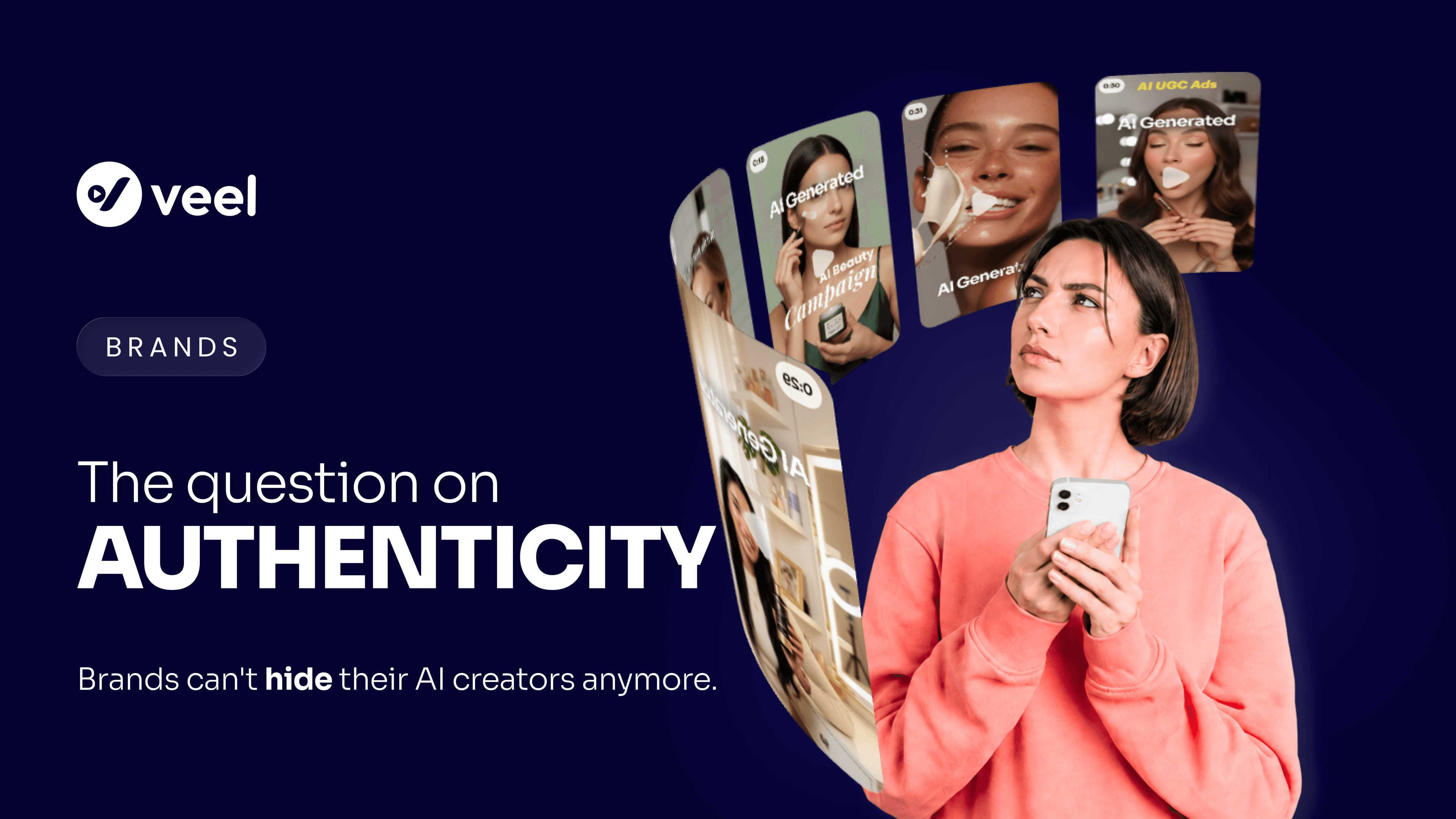
New York's Senate Bill S8420A (effective June 9, 2026) requires brands to disclose AI-generated human figures in ads - or face fines up to $5,000 per violation. This marks a turning point: authentic creator partnerships are no longer just a 'nice to have' - they're a competitive moat. Here's what brands need to know and do right now
📌 Key Takeaways
• NY Senate Bill S8420A requires disclosure of AI-generated human figures in ads as of June 9, 2026
• Fines: $1,000 for first violation, $5,000 for each subsequent one
• Brands can't claim ignorance - intentional blindness is treated as actual knowledge
• More state-level laws are coming; New York is setting the precedent
Real creator relationships remain the most durable form of audience trust
For a while now, brands have been living their best life. Easily swap out a real human creator for an AI-generated one, saving a bunch of money and time. The ads looked great, the "people" in the videos looked great, and no questions were asked. And honestly, why would they?
To an average viewer, these creators looked just like anyone else on their feed. But creator marketing has always been built on authenticity, and if AI-generated people become more realistic, it becomes harder to know whether that authenticity is genuine.
Well, not to burst the bubble, but New York just started asking questions.
As of June 9, 2026, a new New York state law requires brands to clearly disclose when the creators in their ads aren’t actually, you know, people. We’re talking about AI-generated human figures, ones that look so realistic and real enough to make you do a double-take. And if a brand uses one without telling you, they’re getting fined $1,000 for a first violation and $5,000 for each subsequent violation. Sounds big.
For major brands running national campaigns, it is affordable, but that is not really the point here.
The Point is that the Jig Is Up
The law is called Senate Bill S8420A, and it targets synthetic performers (digitally-created, AI-generated characters or avatars designed to realistically mimic human emotions, expressions, and behaviors in visual or audiovisual media). Not a cartoon or an obvious CGI character, but a fake person presented as if they were real.
And many brands have been using them a lot. Like, why hire a model, a photographer, a creative director, and a studio when you can create a video on a random afternoon for a fraction of the cost, right? This makes sense to a lot of us economically, but the ethics? That’s a bit murkier.
To put it simply, you can use AI, and nobody is stopping you. Just be upfront about it, and let people know that they are looking at a digitally created human, not an actual one. That’s the rule.
A side note: Regular people typically can't sue a brand over this, as enforcement is mainly the government's responsibility. However, brands can't avoid liability by claiming they didn't know a synthetic performer was used. In New York, intentionally ignoring information can be treated the same as having actual knowledge.
New York's New AI Disclosure Law: What It Actually Says
As of June 9, 2026, a new New York State law requires brands to clearly disclose when the 'creators' in their ads aren't actually people.
The law : Senate Bill S8420A - targets what it calls synthetic performers: digitally created, AI-generated characters or avatars designed to realistically mimic human emotions, expressions, and behaviors in visual or audiovisual media. This is not about cartoons or obvious CGI. We're talking about fake people presented as if they were real.
Why Does it Matter if the Person is "real" or not?
A fair question to wonder about. If the product is good and the ad is visually nice to look at, who cares, right?
A lot of people do actually. When we watch a video, there’s something about what you think is a real person endorsing a product that carries weight. It implies a shared experience, a point of view, and an emotion. Now, when that person is pixelated and arranged into an algorithm, gaining trust gets a bit complicated. Because we have been saying this for a very long time now, people trust people, not ads.
We know you’re racking your brain cells right now: Okay, but it’s just New York.
Yes, but if you have been watching closely how the state-level legislation actually works, New York State law sets a precedent, which means that other states are now watching closely. Brands running national ads campaigns that have an audience in New York State are also already on the hook. And it's worth knowing that this disclosure law is just one piece of a much larger picture. New York's broader RAISE Act (Responsible AI Safety and Education Act) imposes even more significant obligations on AI developers, taking effect January 1, 2027.
Some brands (the smarter ones) are already on their way to their legal teams to determine which of their content may work.
Why Every Brand Should Pay Attention
If your brand uses AI-generated people in advertising, whether that's full synthetic influencers, generated faces, or anything in between, it's worth an audit. Not just for New York compliance, but because this is the direction things are heading everywhere.
Get ahead of it. Add the disclosure because it costs you nothing. More importantly, it removes the risk of losing audience trust later when people discover the content wasn't what they thought it was.
And they’re increasingly unimpressed by brands that try to sneak it past them.
How You Can Leverage Real People
What distinguishes a real person from an AI-generated character is not the lighting, production value, or tone of voice. It's the creator’s identity, their consistency over time, the reputation they have accumulated, and their relationship with their audience.
Using creators on your ads and videos is not just a face delivering a message. They’re somebody: a person with a timeline, past opinions, and a history of brand alignments. Someone with a set of values that people have questioned, validated, and experienced over time, something synthetic performers simply can't replicate.
We’re already seeing brands lean further towards this approach. Recently, a brand from e.l.f Beauty, Naturium’s “Glow Better Together” campaign put real community members in the spotlight alongside creator Bretman Rock, a longtime fan of the brand. Rather than mass producing authenticity, they invited their customers, people who already had a genuine connection with the brand, to share their own stories and testimonials.
And the results? It wasn’t just another advertisement, but a reflection of the community that already existed. So, for brands, the question isn’t “How should we look?” but “Will the people watching our content believe it?”
The Bottom Line
In a feed where everything looks real, trust becomes the only thing that is. That is why the future of creator marketing isn’t about choosing between AI and humans; it never was. It’s about knowing when authenticity matters the most. Yes, AI has made things easier. It helps brands create faster, but the truth is that real trust is still built through real people, real experiences, and communities.
As a UGC Platform, we've always believed that the most valuable content comes from genuine creator relationships. AI will continue to evolve but trust remains difficult to manufacture. As regulations like New York's AI disclosure law emerge, brands that invest in authentic creator partnerships will be the ones best positioned to earn and keep audience trust.