
Jeevan PokharelSeptember 28, 2026
UGC for Social Media: Why UGC Is Outperforming Every Other Format in 2026
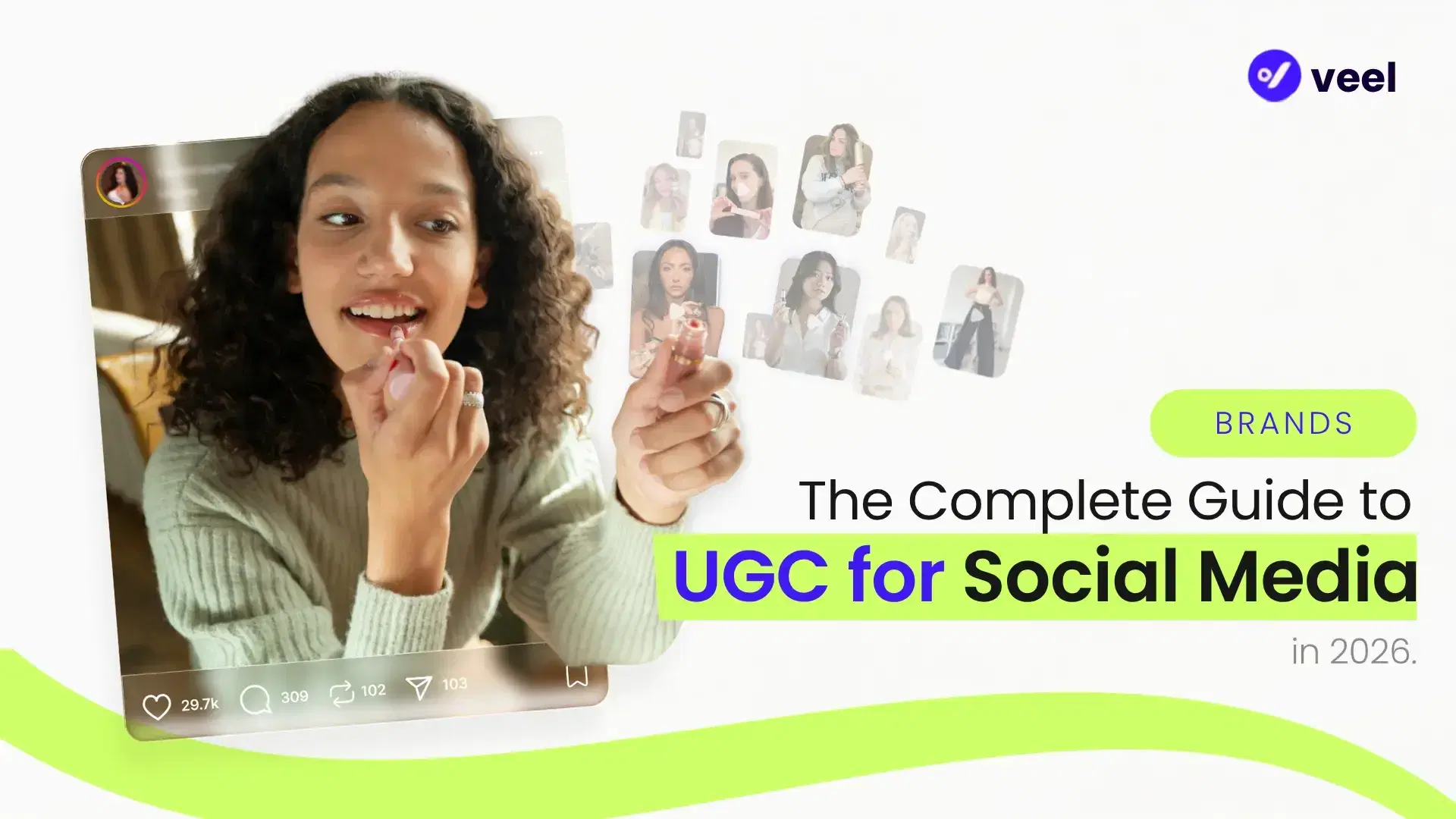
Scroll through any Instagram feed or TikTok "For You" page right now and count how many polished, studio-lit brand ads you actually stop for. Probably not many. Now count how many times you paused because someone who looked like a regular customer was unboxing a product, reviewing a skincare routine, or filming a "get ready with me" that happened to feature a brand's item. That's the format winning attention in 2026, and it has a name: user-generated content, or UGC.
UGC for social media isn't a trend anymore. It's the default expectation. With roughly 5.66 billion people using social media worldwide, or about 68.7% of the global population, per DataReportal's 2026 Digital Overview report, the platforms have gotten crowded, ad fatigue has gotten worse, and audiences have gotten better at spotting a script. Real, unscripted content from real people is one of the few formats still cutting through.
This guide breaks down what UGC actually means on social platforms, why the data keeps pointing in its favor, and how to build a repeatable system for sourcing, publishing, and measuring it, instead of hoping a customer tags you in a story.
What Counts as UGC on Social Media
User-generated content is any photo, video, review, or post created by a real person about a brand's product or service, rather than by the brand's own marketing team. On social platforms specifically, that usually shows up as:
- Unboxing and first-impression videos on TikTok and Instagram Reels
- Testimonial or "day in the life" content that naturally features a product
- Before-and-after transformations (skincare, fitness, home goods)
- Comment-style reviews stitched into short-form video
- Customer photos reposted to a brand's Stories or feed
The "user" doesn't have to be an unpaid fan anymore. Increasingly it's a paid creator producing content that's designed to look native and unscripted, a shift covered in detail in UGC creators vs. influencers, which draws the line between people you pay for content versus people you pay for reach.
The Trust Gap: Why UGC Beats Branded Content
Here's the uncomfortable truth for brand marketing teams: people don't trust brands the way they trust other people. Nielsen's long-running research on earned media has repeatedly found that consumers trust word-of-mouth and peer recommendations, UGC included, above every other form of advertising, a finding that shows up again and again across newer studies. Stackla's consumer research adds more texture to that: 60% of consumers say UGC is the most authentic type of content a brand can share, compared to just 16% who say the same about content the brand made itself.
That gap matters because trust is the actual bottleneck in most social funnels. People aren't short on ways to discover a product. They're short on reasons to believe the product will work for them. A stranger's unfiltered review closes that gap faster than a hero shot ever will.
Platform-level data backs this up:
- On TikTok, UGC-style content consistently outperforms polished branded video and even influencer content on watch time and completion, which is why "made for TikTok" content briefs now default to a handheld, unscripted look rather than a studio setup.
- On Instagram, ecommerce marketers rank the platform as the single best source of engaging UGC among all social channels, according to Backlinko's 2026 roundup of UGC statistics.
- Product pages that embed real customer video alongside the product (not just on social, but pulled back into the store) have been shown to meaningfully lift conversion. That's exactly the loop UGC Reviews is built around: pulling UGC that's already circulating on social and putting it where the purchase decision actually happens.
Why Gen Z Is Accelerating the Shift
If you're marketing to a younger audience, the UGC-first pattern gets stronger, not weaker. Younger social media users increasingly say they trust what they find on social platforms over a traditional search engine, treating a creator's video the way a previous generation treated a Google review. That behavior shift is part of why brands courting Gen Z shoppers are shifting budget out of banner ads and into creator briefs, a topic covered at length in micro-influencer marketing and in the platform's UGC strategy framework for 2026.
Building a UGC Strategy for Social Media (Not Just Hoping for It)
Most brands' first UGC "strategy" is a branded hashtag and a prayer. That worked in 2018. It doesn't hold up against an algorithm that now rewards volume, hook rate, and testing speed. A structured approach looks more like this:
1. Define what the content needs to do. Awareness content, conversion content, and product-page content are not the same brief. Decide before you source a single creator.
2. Brief in batches, not one at a time. Sending five to twenty briefs at once and A/B testing hooks is how brands find their winning angle fast, instead of guessing with a single video and hoping it lands.
3. Source creators who already fit the niche. Follower count is close to irrelevant for UGC. A creator with 800 followers who genuinely uses skincare products will often out-convert a 500K-follower influencer, because the content doesn't need reach, it needs believability. Veel's Global Creator Directory covers this kind of niche-first matching across 550K+ verified creators.
4. Own the usage rights from day one. If you plan to run the content as a paid social ad, often the highest-leverage move, since ads posted from a creator's own handle can pull in meaningfully lower cost-per-acquisition than the same creative run from a brand account, you need clear rights in the contract before filming starts, not after.
5. Pull the content back to where people buy. Social is where UGC gets discovered, but the product page is often where it gets people to convert. Embedding real customer or creator video directly on a PDP is one of the more reliable conversion levers available right now. That's the core idea behind UGC Reviews tool: it scans platforms like TikTok, Reels, and Shorts for videos already mentioning a brand and organizes them into a shoppable library.
6. Track it like a performance channel, not a vibe. Hook rate, completion rate, cost-per-acquisition by creator, and UGC-attributed revenue are the metrics that separate brands that treat UGC as marketing theater from ones treating it as an acquisition channel. That distinction is exactly what performance analytics tooling is built to surface.
Common Mistakes Brands Make With Social UGC
- Overproducing it. The second a UGC video looks like a commercial, it stops behaving like UGC in the algorithm or in the viewer's head. Raw beats polished, almost every time.
- Treating it as a one-off. A single viral customer video is luck. A pipeline of creators briefed weekly is a strategy.
- Skipping the rights conversation. Reposting a customer's video without a clear agreement is a fast way to end up in a dispute, worth reading alongside breakdown of music and content copyright for creators and brands.
- Ignoring where it gets stored. Content scattered across a dozen brand employees' phones and DMs is content that never gets reused. A single content library, tied to usage rights, is what makes repurposing actually possible.
How Veel Fits Into a Social UGC Workflow
Veel brings the sourcing, briefing, rights management, and distribution pieces into one system instead of the five-tool stack most teams cobble together. Brands can run creator collaborations to commission new social-first content, use UGC Reviews to pull existing customer content from social platforms into a moderated library, and auto-post approved content back out across channels, all while comparing plans against alternatives like Billo, Insense, and Refersion to see where the actual cost differences sit. Teams unsure where their current social presence stands can start with the free Social Media Audit or the Content Idea Generator before committing budget to a campaign.
For a deeper look at how the metrics side comes together once content is live, Veel's guide to social media metrics for creators walks through what to actually track once the content is out in the wild.
The Bottom Line
Social platforms have gotten too crowded and too algorithm-driven for polished brand content to win attention on its own. UGC works because it doesn't ask an audience to trust a brand. It asks them to trust another person, and people are simply better at that. Brands that build a repeatable pipeline for sourcing, rights, and distribution are the ones compounding that trust into lower acquisition costs quarter over quarter. The ones still hoping a hashtag goes viral are competing with one hand tied behind their back.
Sources: DataReportal's Digital 2026 Global Overview Report; Nielsen Global Trust in Advertising research; Stackla consumer trust studies as compiled by Backlinko's 2026 UGC statistics roundup.