
Richa TandukarApril 16, 2026
Brands Maximize ROI by Reimagining Existing Content | Veel

TL;DR
- A single, well-briefed UGC video can be repurposed across paid ads, organic social, email campaigns, product pages, and retargeting-without creating new content.
- Your paid social data already shows which UGC videos perform best, making it easier to identify winners worth repurposing across other channels.
- Secure usage rights before repurposing, including permission for paid advertising, editing, and use across specific platforms.
- Track performance by channel with UTMs and unique promo codes. For paid campaigns, hook rate is one of the fastest indicators of early creative performance.
The Endless Cycle of Creative Ideation
Brands often fall into the trap of constantly chasing the “next big idea.” Every week, there’s pressure to produce fresh ad concepts, brainstorm unique hooks, and experiment with multiple formats. But we all know the reality is that constant ideation can drain budgets, slow campaigns, and sometimes fail to deliver measurable results.
This is where the power of repurposing winning ad concepts comes in. By leaning into what already works, brands can optimize performance, save resources, and scale campaigns faster without sacrificing creativity.
Why Repurposing Works
1. Proven Performance Drives Higher ROI
When an ad concept has already resonated with your audience, you know it has the ingredients for success: compelling messaging, attention-grabbing visuals, and strong engagement hooks. Repurposing allows you to expand its reach across formats, platforms, and demographics, increasing ROI without reinventing the wheel.
Recommendation: Use data from your top-performing ads on TikTok, Instagram Reels, or YouTube Shorts to identify key themes, creative structures, and calls-to-action that consistently drive engagement.
2. Saves Time and Resources
Creating new ad concepts from scratch demands hours of brainstorming, scripting, and production. By repurposing a proven concept, your creative team can skip the “blank page” phase and focus on optimizing messaging, testing new angles, and tailoring content for specific audiences.
The same core video can be transformed into multiple shareable assets by:
- Scripts & Placeholder CTAs: Adjusting tone, emphasis, or call-to-action for different audience segments.
- Cuts & Visual Variations: Reordering footage, experimenting with overlays, or tweaking pacing.
- Formats & Aspect Ratios: Adapting content for TikTok, Instagram, or YouTube placements.
- Hooks & Angles: Opening with different emotional or logical triggers to capture attention quickly.
This approach maximizes content value, accelerates production cycles, and keeps your campaigns consistent yet fresh.

3. Consistent Brand Messaging Across Platforms
Repurposing ensures your brand stays recognizable while adapting to platform-specific behaviors. For instance, a viral TikTok format can be adapted into Instagram Stories or a YouTube Short with minimal tweaks, keeping your brand identity intact.
4. Encourages Micro-Testing and Iteration
Once a concept proves successful, you can experiment with micro-variations: swapping CTAs, changing captions, or using different UGC creators. This controlled testing helps brands uncover subtle optimizations that maximize engagement and conversions.
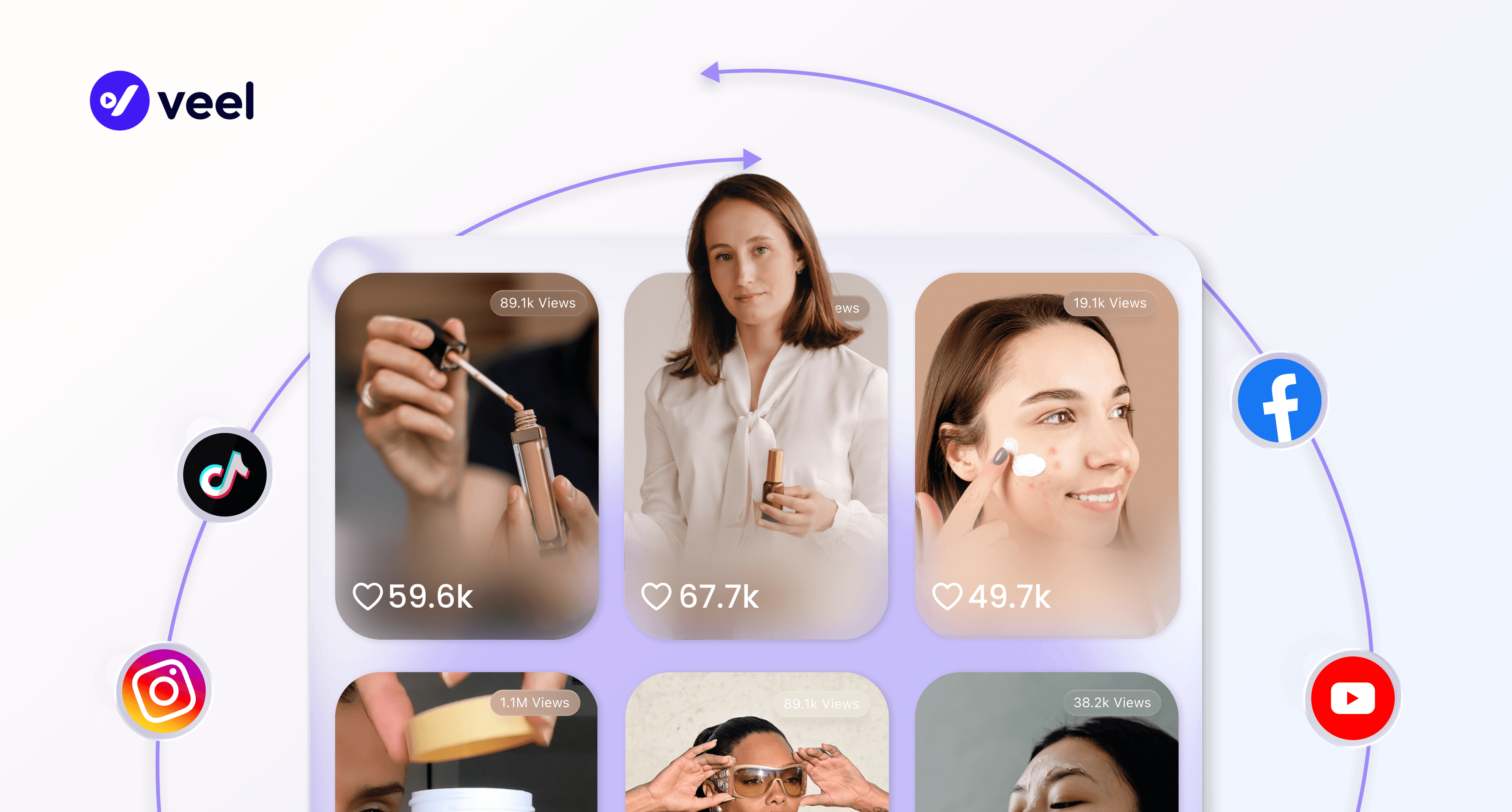
How Brands Can Repurpose Like a Pro
Repurposing isn’t just a strategy; it’s a workflow. Here’s how to turn a single winning ad concept into multiple high-performing assets:
Pick Your Winning Concept
- Look at your top-performing videos from TikTok, Instagram, or YouTube Shorts.
- Focus on content that has consistent engagement not just one viral spike.
- Check metrics like CTR, watch time, shares, and conversions to choose the right concept.
Break It Into Mini-Assets
- Identify the key message or insight that makes the concept work.
- Split the story into smaller sections: problem, solution, demo, social proof.
- Each section becomes a standalone asset.
Create Variations for Hooks & Angles
- Rewrite openings to test different attention-grabbing hooks: question, surprise, or benefit.
- Test multiple angles, be it from a visual angle or from a script perspective.
Adjust Scripts & CTAs
- Tailor scripts for different audiences or placements without changing the main insight.
- Swap out placeholder CTAs to test engagement: “Shop Now,” “Learn More,” “Try It Today.”
Test Cuts & Visuals
- Experiment with pacing, B-roll order, text overlays, and visual emphasis.
- Keep the core story the same, but see which editing style performs best.
Optimize Formats & Aspect Ratios
- Repurpose the same footage for vertical, square, and horizontal formats.
- Match platform requirements: TikTok (9:16), Instagram Feed (1:1), YouTube Shorts (vertical).
Collaborate With Creators
- Use Veel’s creator network to film fresh takes or variations.
- Different creators bring new energy and style without changing the proven concept.
Track Performance & Scale
- Monitor which variations drive the most engagement and conversions.
- Double down on winning combinations and pause low performers.
The Veel Advantage
Veel makes it effortless for brands to repurpose winning ad concepts. With access to 350K+ verified creators and a platform built for authentic UGC strategy, brands can scale ideas quickly, test variations, and maintain consistent messaging across channels.
Instead of chasing endless ideation cycles, Veel empowers brands to leverage what already works and elevate campaigns in record time.

Key Takeaways for Brands
- Stop overloading your team with constant ideation; focus on proven concepts.
- Use data to identify what resonates and expand across platforms.
- Repurpose creatively for higher ROI, brand consistency, and faster campaign cycles.
- Partner with creators through Veel to refresh and amplify winning ideas.
The 5 channels where repurposed UGC drives the most impact
Most brands start in the same place: they brief creators, receive the videos, and run them as paid social ads. That’s the right starting point. Paid social is where UGC performance is often easiest to measure and where winning creative quickly becomes visible.
The bigger opportunity comes after that. Once you identify a strong-performing UGC asset, the same video can continue working across additional channels-without commissioning another shoot. Each new placement increases the return on content you’ve already invested in.
1. Paid social
Paid social is where most brands first deploy UGC, and for good reason: creator-led content can deliver measurable performance improvements when paired with the right format and audience.
On TikTok, creator-led ad formats such as Spark Ads allow brands to amplify content from a creator's account, helping the ad retain a more native and organic feel. On Meta, Partnership Ads enable brands and creators to collaborate on advertising, combining creator content with paid distribution.
Imagine you're a DTC skincare brand that receives five creator videos from a campaign. Running them as standard ads from your brand account may generate results, but testing creator-led formats can help the content feel more native to the platform.
The key is not simply to use UGC as another piece of ad creative. Test different creators, hooks, formats, and messaging, then use performance data to identify the videos worth scaling and repurposing elsewhere.
2. Organic social
Organic social is often overlooked because many brands treat UGC primarily as a paid asset. That can leave valuable reach, engagement, and testing opportunities on the table.
A strong approach is to publish the content organically before or alongside paid promotion. Native engagement can provide an early indication of how audiences respond to the creator, hook, and message.
A single vertical video can also be adapted for multiple platforms, including TikTok, Instagram Reels, and YouTube Shorts. This allows brands to get more value from the same production without creating entirely new assets for every channel.
The practical approach is simple: keep the core content, but adapt it for each platform. Adjust captions, safe zones, overlays, thumbnails, and CTAs rather than reshooting the entire video.
3. Website and product pages
Product pages are where customers make purchase decisions, and UGC can provide the social proof they need to move from consideration to conversion.
Unlike polished studio creative, creator and customer videos can demonstrate how a product looks, feels, or works in real-life situations. This helps answer one of the most important questions potential customers have: Will this work for someone like me?
For example, imagine a supplement brand generating strong traffic from Meta Ads but struggling to improve its product page conversion rate. Before changing targeting or completely redesigning the page, the brand could test adding three to five authentic customer or creator videos near key decision points.
These videos can include:
- Product demonstrations
- Customer testimonials
- Before-and-after experiences
- Unboxing content
- Answers to common objections
The goal is to place relevant social proof where customers are making their final decision.
4. Email marketing
Email is often one of the most underused channels for repurposing UGC.
The creator videos originally produced for paid social can also be used in email campaigns and automated flows. However, avoid embedding large raw video files directly into emails, as support varies across email clients and file sizes can affect the user experience.
Instead, use a thumbnail, animated preview, or short GIF with a clear play button that links to the full video or relevant landing page.
UGC can work particularly well in:
- Post-purchase flows: Reinforce the customer's decision and encourage repeat purchases.
- Win-back campaigns: Use customer stories and testimonials to rebuild interest.
- Product launches: Add authentic customer or creator perspectives alongside the brand's messaging.
- Abandoned cart flows: Address objections and show how real people use the product.
For example, if you've just finished a campaign featuring six creator videos, the campaign may be over—but the content still has value. The strongest-performing assets can be reused as clickable thumbnails or visual elements in existing email flows.
The practical move: Take your three best-performing creator videos, test them in your next email sequence, and compare click-through and conversion performance against your existing baseline.
5. Retargeting
Retargeting audiences already know your brand. At this stage, the goal isn't necessarily to introduce the product, it’s to address the objections preventing someone from converting.
This is where repurposed UGC can become especially effective.
Consider someone who has visited your product page multiple times but hasn't made a purchase. They already understand what you sell. What they may still be questioning is whether the product will actually work for them.
A creator testimonial focused on a specific outcome such as overcoming skepticism, solving a problem, or sharing a real experience can be more relevant at this stage than a broad awareness-focused video.
For retargeting, look for UGC that focuses on:
- Real results or outcomes
- Customer objections
- Product comparisons
- Frequently asked questions
- Testimonials
- Strong calls to action
- Time-sensitive offers or urgency
The briefing implication: If you already know you'll be using creator content for retargeting, plan for it from the beginning. Brief one or two creators specifically around outcomes, objections, and proof-not just attention-grabbing awareness hooks.
Ready to Scale Your Winning Ad Concepts?
Discover creators, test variations, and maximize your ROI with Veel.
👉Check our previous blog: Creators Economy Marketing