.JPG.jpeg&w=3840&q=75)
Binaya DhakalSeptember 2, 2026
Why San Francisco Businesses Are Losing Customers Before They Ever Walk In
Someone is standing outside two businesses right now, a block apart, phone in hand, trying to decide which one to walk into. They're not flipping a coin. In the next thirty seconds, they're going to check something on their phone, and whatever they find is going to decide for them.
That moment happens thousands of times a day across San Francisco, and most business owners have no idea it's where they're actually winning or losing customers. Not at the counter. Not in the dining room. On a phone screen, seconds before anyone walks in.
The Decision Has Already Moved Online
It's tempting to think a good product and solid word of mouth are still enough. The data says otherwise, and the shift has been faster than most business owners have caught up with.
Nearly all consumers now research a local business before visiting one. Recent survey data puts the number of people who read reviews before choosing a local business as high as 97%, and more than 90% say those reviews directly influence whether they end up buying at all. This isn't a niche behavior anymore. It's close to universal.
What's changed more recently is how much research people are doing before they decide. A few years ago, checking one or two review sites was normal. Now, the average consumer checks around six different sources before settling on a local business, and the share of people who say they "always" read reviews before choosing where to go jumped from 29% to 41% in a single year. People aren't just glancing at a star rating anymore. They're actively cross-checking.
And the format of what they're looking for has shifted too. Text reviews used to be the whole picture. Increasingly, they're not enough on their own. Video-based reviews and content are projected to influence roughly a third of local purchase decisions this year, nearly double what that number was just three years ago. Among younger consumers specifically, short, unscripted video, the kind that shows up on TikTok or in Instagram Reels rather than a formal review page, is expected to shape 15 to 20% of local business decisions on its own.
The pattern underneath all of this is consistent: a five-star rating with no visual proof behind it is starting to look thin next to a competitor who has real people on camera talking about their experience.
Good Service Isn't the Same as Visible Proof
Plenty of San Francisco businesses have excellent service, loyal regulars, and genuinely happy customers. What they don't have is content that shows any of that to someone who's never walked in before.
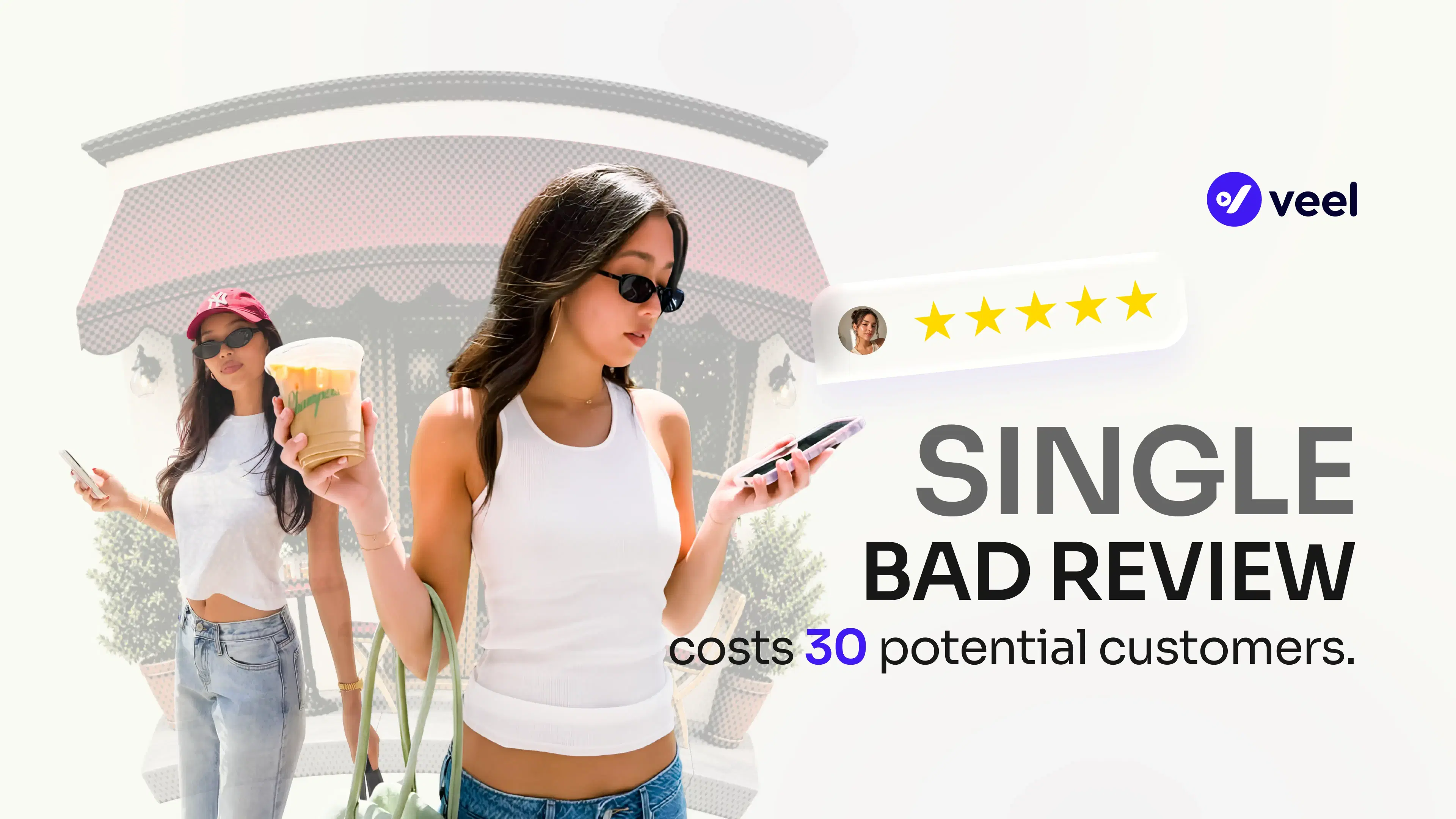
Research on review impact has found that a single negative review can cost a business as many as 30 potential customers. On the flip side, a business with a strong, visible base of authentic proof, reviews, photos, and especially video, tends to win the decision before a competitor with a quieter online presence ever gets a chance to make their case in person.
Most small and mid-sized businesses know they should be doing something here. Very few have the time, team, or budget to actually produce a steady stream of content that keeps up. A restaurant owner running a kitchen doesn't have hours to spend sourcing creators or editing video. A law firm or a local retailer usually doesn't have anyone on staff whose job is content at all. The result is a business that's genuinely good at what it does, but invisible at exactly the moment a customer is deciding whether to walk in.
What Actually Closes the Gap
The businesses pulling ahead right now are showing up with something advertising can't fully replace: real people, on camera, talking about a real experience. That's what a prospective customer is actually looking for in those thirty seconds of research: proof that someone like them already had a good experience.
Getting that kind of content consistently isn't really a marketing budget problem. It's an operational one. Most business owners don't need convincing that creator and customer video works. What they're missing is a straightforward way actually to get it made: finding the right creators, briefing them, managing approvals, and getting the finished content out onto the channels where customers are actually looking, all without turning it into a second job.

This Is What the SF Chamber of Commerce and Veel Partnership Is Built to Solve
That's the gap this partnership is meant to close. The San Francisco Chamber of Commerce represents businesses of every size and industry across the city, and Veel gives those members a direct way to get real creator and customer content working for them, without needing an in-house content team or an agency retainer to do it.
As part of the partnership, Veel gives SF Chamber members access to a network of verified creators, a single platform to manage campaigns, approvals, and content rights, and the workflow to get finished content published across a business's website, social channels, and paid advertising. Businesses that already work with a creator or an agency can keep those relationships exactly as they are and use Veel to make the process around them run smoother. Businesses starting from nothing get walked through sourcing a first creator and launching a first campaign, with guidance built specifically for local San Francisco businesses.
The Bigger Picture
San Francisco has no shortage of good businesses. What separates the ones winning the decision at the exact moment a customer is standing outside deciding isn't always quality. It's whether that business has given someone a reason to trust them before they ever walk through the door.
That's not a trend that's going to reverse. Every year, more of the decision happens earlier, on a phone, before a business ever gets the chance to prove itself in person. The businesses adapting to that now are the ones who'll still be top of mind when someone's standing outside deciding where to go next.
Frequently Asked Questions
Do I need a marketing team to do this?
No. Veel is built specifically for businesses that don't have a dedicated content or marketing team. You don't need design, video editing, or creator-sourcing experience. The platform handles finding creators, managing briefs and approvals, and getting content published, so a single business owner or a part-time marketing hire can run a campaign without adding headcount.
What's the difference between a review and creator content?
A review is text, usually short, usually static, and easy to skim past. Creator content is video: a real person showing up on camera, using a product or describing an experience in their own words. Both build trust, but video is increasingly what tips a decision, since it's harder to fake and easier to connect with than a few lines of text. Many businesses use both together, reviews to build a baseline of trust, and creator video to close the gap for someone who's still deciding.
Can I keep working with my current agency or creators?
Yes. Veel isn't meant to replace relationships that are already working. If you already have creators or an agency you work with, you can keep that exactly as is and use Veel to manage the parts that usually take the most time: briefing, approvals, content rights, and publishing, so the relationship you already have runs more efficiently.
How long does it take to launch a first campaign?
Most businesses can get a first campaign live within days. Once you're onboarded, you can put together a brief, get matched with relevant creators, and start reviewing submissions shortly after. SF Chamber members also get priority onboarding, which shortens the time between signing up and actually having content in hand.
Does this work for service businesses as well?
Yes. Creator content isn't limited to physical products or dine-in experiences. Professional service firms, healthcare practices, contractors, and other service-based businesses use it to put a face and a real story behind their work, since customers researching a lawyer, a contractor, or a clinic are going through the same trust-building research process as someone choosing a restaurant.
Sources: BrightLocal, Local Consumer Review Survey 2026; SOCi, Local Visibility Index 2026; Rio SEO, Local Search Behavior Analysis 2026; Exploding Topics, Online Review Statistics 2025.