D
Dipankar PyakurelNovember 19, 2026
User-Generated Content for Social Media Managers: How to Source, Manage and Scale UGC in 2026
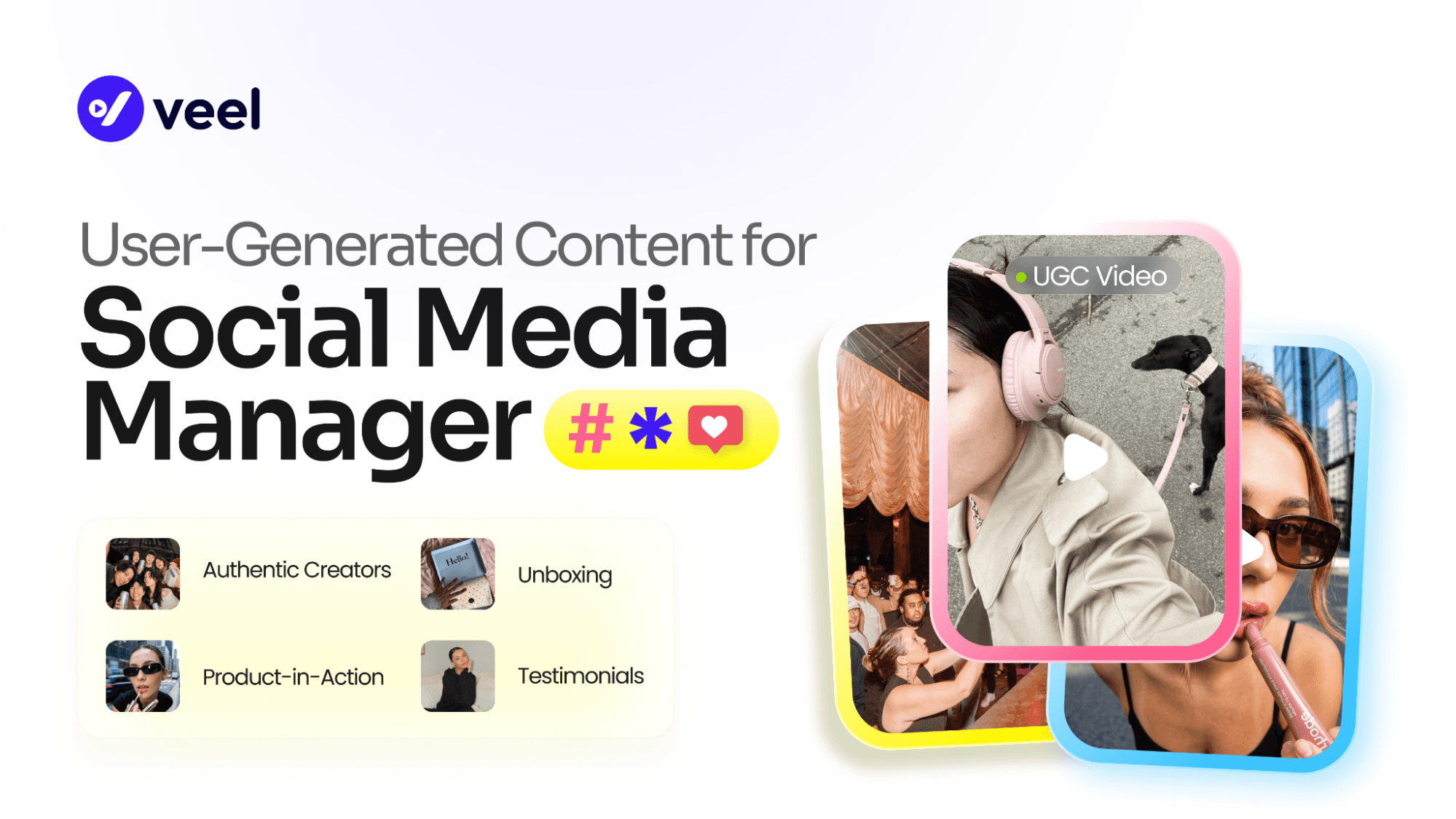
Discover how social media managers can use user-generated content to build brand trust, maintain a consistent content pipeline, and create more effective social media strategies.
You have planned the content calendar, prepared the campaign briefs, and scheduled the posts. But keeping your brand's social media presence fresh and engaging is still a challenge. The same promotional creatives and carefully produced brand videos keep appearing on your audience's feed.
What is missing? A real perspective.
Today's audiences want to see more than what brands say about their products. They want to see how people use them, what customers think, and whether others genuinely recommend them.
This is where user-generated content (UGC) comes in. For social media managers handling multiple platforms and campaigns, UGC offers an opportunity to create more relatable content, strengthen brand credibility, and maintain a consistent content strategy.
This guide explores what UGC is, why it works, the challenges social media managers face, and how to build an effective UGC strategy.
What Is User-Generated Content for Social Media?
User-generated content refers to photos, videos, reviews, testimonials, and social media posts created by customers or individuals featuring a brand, product, or service. Unlike traditional brand-produced content, UGC brings real experiences and perspectives into brand communication.
UGC generally comes in two forms:
Organic UGC: Content customers voluntarily create and share, such as product reviews, tagged photos, and unboxing videos.
Paid UGC: Content produced by creators in exchange for compensation, usually based on a brand brief and agreed deliverables.
While organic UGC provides genuine customer perspectives, paid UGC helps brands maintain a more predictable content supply. Combining both allows social media managers to maintain authenticity while meeting ongoing content requirements.
Why Does UGC Perform Better?
People are more likely to relate to experiences shared by other consumers than to purely promotional brand messaging. UGC helps bridge the gap between what a brand promises and what customers actually experience.
Research across international consumer markets highlights its growing importance.
According to Emplifi's 2026 Digital Authenticity in the Age of AI research, 63% of surveyed consumers considered user-generated ratings and reviews authentic, compared with 42% for influencer ratings and reviews and 31% for AI-generated content.
UGC also influences purchasing decisions. Akeneo's 2025 research found that 65% of British consumers had purchased a product based on online reviews or comments from fellow shoppers.
Beyond trust and purchasing decisions, UGC offers brands several advantages:
- Stronger brand credibility: Customer experiences provide social proof and make brand communication more relatable.
- Higher content variety: Different customer perspectives create opportunities for diverse content formats.
- Greater content efficiency: Brands can repurpose approved UGC across social media, advertisements, and e-commerce platforms.
- Better audience engagement: Relatable content can encourage conversations, shares, and community participation.
The takeaway is simple: UGC gives brands more ways to communicate through real experiences rather than relying entirely on their own promotional content.
The Challenges Social Media Managers Face With UGC
Despite its benefits, managing UGC consistently involves more than collecting customer photos and reposting videos.
Finding a consistent content supply is one of the biggest challenges. Organic customer posts are unpredictable, making it difficult to maintain a steady publishing schedule. Paid collaborations can fill these gaps, but require additional budgets and coordination.
Managing content permissions is another concern. Finding a great social media post does not automatically give a brand permission to reuse it. Managers need to request approval, establish usage terms, and maintain creator attribution. A 2024 MASV survey found that 47% of creators whose content had been used by brands reported that it had been used without permission.
Other common challenges include:
- Maintaining authenticity: Ensuring content reflects genuine experiences rather than overly scripted or misleading messaging.
- Managing multiple workflows: Coordinating creator discovery, campaign approvals, content collection, publishing, and payments across different tools.
- Tracking performance: Understanding which creators and content formats contribute to engagement, traffic, conversions, and sales.
For social media managers, the challenge is not simply creating UGC. It is managing the entire process without allowing administrative work to take time away from strategy and creative development.
How to Build a UGC Strategy:
A successful UGC strategy requires a structured approach that connects content discovery, creator collaboration, publishing, and performance measurement.
1. Define Your Content Objectives
Before sourcing UGC, identify what you want to achieve. Whether the goal is increasing brand awareness, building trust, improving engagement, or driving conversions, having a clear objective helps determine the type of content you need.
For example, customer testimonials can strengthen credibility, while product demonstrations and creator reviews can help potential buyers make informed decisions.
2. Find the Right Customers and Creators
Start by monitoring brand mentions, hashtags, tagged posts, and customer reviews to discover existing organic content.
When additional content is needed, collaborate with creators who align with your brand and target audience. Look beyond follower counts and consider:
- Audience demographics and relevance.
- Engagement quality.
- Content style and authenticity.
- Previous campaign performance.
- Budget and collaboration requirements.
3. Encourage Content Creation
Make it easy for customers and creators to share their experiences. Branded hashtags, social media challenges, product sampling, giveaways, and review requests can encourage participation.
When working with paid creators, provide clear briefs while allowing enough creative freedom to maintain their individual style.
4. Organize Content and Manage Permissions
Establish a process for requesting approvals, documenting usage rights, and organizing content assets. A centralized content library can help teams categorize materials by campaign, creator, platform, and format.
This makes it easier to find approved content and reuse it across different marketing channels.
5. Publish and Repurpose Your UGC
UGC should not be limited to a single social media post. A creator video can be repurposed for:
- Instagram Reels and TikTok videos.
- Paid social media advertisements.
- Website and product pages.
- Email marketing campaigns.
- Brand landing pages.
Scheduling and publishing tools can help maintain consistency while reducing repetitive manual work.
6. Measure Performance and Optimize
Track more than views and likes. Evaluate the metrics that align with your campaign objectives, including reach, engagement, website traffic, click-through rates, conversions, and affiliate sales.
Regular performance reviews help identify successful creators, content formats, and campaign approaches, allowing social media managers to improve future collaborations.
UGC Mistakes Social Media Managers Should Avoid
Even a well-planned UGC strategy can become ineffective when certain practices are overlooked.
- Using content without permission: Always obtain appropriate approval before reusing customer or creator content, especially in advertisements.
- Prioritizing reach over relevance: A large following does not guarantee audience alignment or meaningful engagement.
- Making every collaboration look like an advertisement: Overly scripted content can remove the natural feel that makes UGC valuable.
- Collecting content without measuring results: Organize, publish, and evaluate your assets instead of allowing valuable content to remain unused.
How Veel Helps Social Media Managers Manage UGC
Managing multiple creators, campaigns, and social media channels can quickly become complicated. Social media managers need more than a platform to discover creators; they need a connected system to manage different parts of their content workflow.
This is where Veel comes in.
Veel brings creator collaborations, UGC management, social media management, affiliate marketing, content distribution, and performance analytics together in one platform.
Discover Creators and Manage Campaigns
Veel provides access to a global network of 550K+ verified creators, supported by AI-powered creator matching. Brands can discover creators based on their campaign objectives, niche, budget, and performance.
Its UGC, Influencer, Public Campaign, and Creator Partnership solutions help brands organize collaborations and maintain a consistent content pipeline.
Collect and Organize Content
Through its Content Library, Veel helps teams centralize creator videos and social media assets, organize content by campaign, and collaborate with team members.
Its UGC Reviews solution also helps brands collect customer video reviews and discover existing customer videos mentioning their brand across supported social platforms.
Simplify Social Media Publishing and Management
Once content is ready, Veel supports scheduling and auto-publishing across Meta, TikTok, and YouTube.
Its Sis - AI Social Media Manager helps with content ideas, planning, caption writing, and publishing in a brand's voice. Meanwhile, Social Guard helps manage comment sections by filtering spam and abusive comments and responding to customer questions.
Track Performance and Creator Results
Veel's performance analytics and affiliate marketing capabilities help brands understand how their creator collaborations contribute to marketing outcomes.
Creator-specific affiliate links and tracking provide additional visibility into traffic and sales. Veel also supports creator payments across 121+ countries in local currencies.
By connecting these capabilities, Veel helps social media managers reduce manual coordination and spend more time on content strategy, creative development, and audience engagement.
Explore the platform at veelapp.com.
UGC for Social Media FAQs
What is user-generated content?
User-generated content (UGC) is any photo, video, review, testimonial, or social media post created by customers or individuals featuring a brand, product, or service.
What is the difference between organic and paid UGC?
Organic UGC is content customers create and share voluntarily, such as reviews, tagged photos, and unboxing videos. Paid UGC is created by creators in exchange for compensation, based on a brand brief and agreed deliverables.
Do I need permission to reuse UGC?
Yes. Finding a great post does not give your brand permission to reuse it. Request approval and agree on usage terms, especially before using content in advertisements. Keep creator attribution.
How do I measure UGC performance?
Track metrics that match your objective, including reach, engagement, website traffic, click-through rates, conversions, and affiliate sales. Review them regularly to see which creators and formats work best.
Comments
Want to join the discussion?
Comments come from our Discord community.